Is genital molluscum always sexually transmitted?
No. Intimate skin contact is one route in adults, but the virus can also spread by other skin contact and from one part of your body to another.
Molluscum is a viral skin infection that causes small, smooth, pearly bumps, often with a tiny dip in the centre. It is not the same infection as HPV genital warts.
Dr Neeraj Garg · MBBS (IMS-BHU), MD (IMS-BHU) · Dermatologist & STD / STI Specialist, Dehradun
Request an Appointment ↗For privacy, send only a simple appointment request through WhatsApp. Medical details can be discussed during consultation.
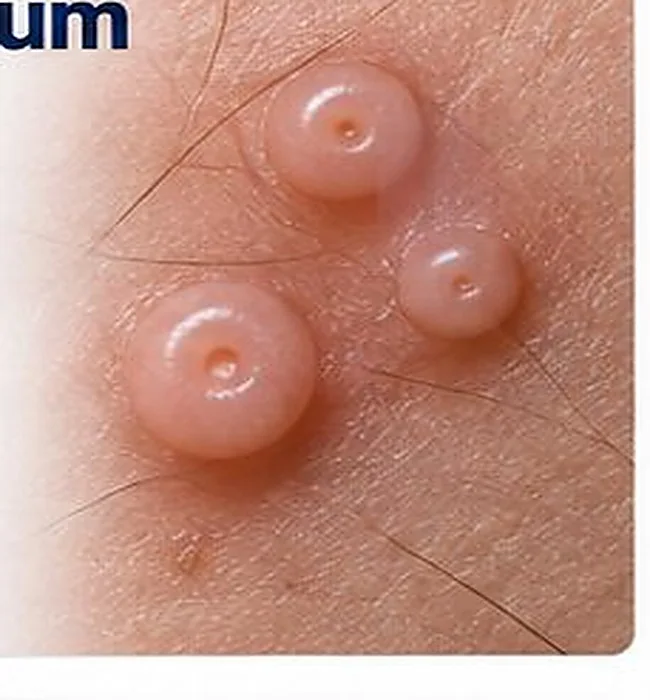
Educational illustration, not an actual clinical photograph. Signs vary and a diagnosis requires assessment.
Small pearly bumps are sometimes confused with HPV warts or skin tags. Examination helps distinguish these conditions and decide whether treatment is necessary.
No. Intimate skin contact is one route in adults, but the virus can also spread by other skin contact and from one part of your body to another.
Diagnosis is usually made by looking closely at the bumps. Dermoscopy or other tests may be needed if the appearance is unusual.
Some bumps settle without treatment. Depending on number, site and symptoms, a dermatologist may suggest observation, careful extraction, curettage or cryotherapy.
Other skin conditions may look similar. A clinician can usually distinguish molluscum from genital warts during an examination.
People commonly book an appointment for:
Assessment helps identify the likely cause, choose useful tests and explain treatment and follow-up without unnecessary medication.
Clinical examination; dermoscopy or microscopy/biopsy when diagnosis is uncertain. Consider other STI testing according to risk.
Most molluscum bumps are recognised by their appearance. Dermoscopy or further assessment is reserved for unusual or uncertain lesions; routine blood tests do not diagnose molluscum.
Common concerns explained in plain language. A test result or photograph alone may not tell the whole story.
Molluscum contagiosum often causes round, smooth bumps with a tiny central dimple. Similar-looking bumps may be warts, skin tags or other conditions. Genital molluscum is common in sexually active adults but it can spread without sexual contact as well.
Molluscum sometimes disappears on its own over months. Treatment may be considered for discomfort, spreading lesions, diagnosis uncertainty or a wish to reduce skin-to-skin spread. The number and location of bumps, skin sensitivity and risk of marks help determine whether removal is appropriate.
Picking, shaving or waxing across lesions can carry virus to nearby skin. New lesions may also have been incubating before an earlier bump was removed. Avoid squeezing bumps, sharing razors or scratching the area; ask for an examination if bumps keep appearing or are unusually widespread.
Molluscum usually produces smooth, dome-shaped, pearly papules with a central dimple. Genital warts more often have a rough, irregular or cauliflower-like surface, although appearances overlap. A dermatologist may use dermoscopy, and occasionally further investigation, if the diagnosis is uncertain.
In adults, lesions on genital or adjacent skin can spread through intimate skin-to-skin contact, including sexual contact. Molluscum can also spread nonsexually through direct contact and transfer between areas of a person's own skin. A genital lesion alone cannot establish exactly how or when infection was acquired.
Scratching, squeezing, picking or shaving across lesions can transfer virus to nearby skin. New lesions may appear weeks after exposure because of the incubation period; this does not always mean treatment of earlier bumps failed.
A treated bump may clear while other lesions that were incubating become visible later. Follow-up may be needed if new lesions appear. Avoid interpreting every new bump as a procedure failure; examination helps distinguish new lesions, persistent lesions and other diagnoses.
Avoid shaving or waxing over active bumps and do not squeeze them. Do not share towels or razors; wash hands after touching lesions. Cover lesions when practical, and avoid direct intimate contact with affected skin until lesions resolve or your clinician advises otherwise.
Molluscum bumps usually become visible several weeks after infection; the incubation period is commonly about 2–7 weeks but can be longer, sometimes up to six months. In otherwise healthy people, individual lesions often disappear without treatment within 6–12 months, although complete clearance can take longer, occasionally years. New bumps may develop while older ones are resolving. Adults with genital lesions may reasonably choose treatment to reduce spread and for comfort; timing is individual.
Observation or clinician-directed extraction, cryotherapy or curettage may be considered based on lesion number and site. Avoid picking or shaving over lesions.
Some lesions clear without treatment; removal may be appropriate for genital lesions or bothersome spread. Do not squeeze bumps or use harsh over-the-counter wart acids on sensitive skin.
A focused, non-judgmental assessment is tailored to your symptoms and exposure history. An examination or test is recommended only when clinically appropriate, with your consent.
We understand that concerns about genital symptoms, sexual contact or a positive test can feel personal. Your appointment is approached respectfully, without blame or judgment.
Medical confidentiality is subject to applicable law and clinical obligations. Please avoid sending intimate photographs or detailed sexual histories in an appointment enquiry.
Dr Neeraj Garg holds MBBS (IMS-BHU) and MD (IMS-BHU) qualifications and provides dermatology and venereology consultations in Dehradun. The focus is on explaining symptoms, interpreting appropriate tests and discussing a practical next step.
No. It may spread by intimate skin contact but also through nonsexual skin contact or from one area of your body to another.
Molluscum bumps are often smooth and have a small central dimple; HPV warts are more often irregular or rough. An examination may be needed.
Yes. Shaving or scratching can spread the virus to nearby skin, so avoid shaving across active bumps.
No. Squeezing can spread infection and cause inflammation or scarring.
Sharing personal items may help spread the virus. Avoid sharing towels or razors while lesions are present.
Many lesions clear on their own over months, but complete clearance can take longer. Treatment may be appropriate depending on location, number and preference.
No, but scarring is possible, particularly after picking or aggressive treatment. Your clinician can discuss risks of different methods.
Not necessarily. Previously incubating lesions may appear after other bumps have been removed.
Often within several weeks, but incubation can vary widely. The timing of a bump cannot reliably identify the source.
Symptoms overlap, and some infections cause no symptoms. These links help you find information, not diagnose yourself.
This patient guide is educational and does not replace an individual clinical assessment. Treatment and testing recommendations may change with local guidance, pregnancy, other conditions and antibiotic resistance.
Request a confidential STD / STI consultation with Dr Neeraj Garg, MBBS (IMS-BHU), MD (IMS-BHU), in Dehradun. Get individual guidance about symptoms, reports, testing and next steps.
Request an Appointment ↗Appointment enquiry only: there is no need to send intimate images or detailed medical information through WhatsApp.
Patient information updated 10 October 2026. This page provides general education and cannot replace an individual medical assessment. The appearance of a symptom does not by itself prove an STI.